

PSEB 10th Board Exams 2026 ਲਈ ਤਿਆਰੀ ਕਰਨੀ ਮੁਸ਼ਕਲ ਨਹੀਂ ਹੋਣੀ ਚਾਹੀਦੀ। ਇੱਕ ਸਪਸ਼ਟ 90 ਦਿਨਾਂ ਦਾ ਪੜ੍ਹਾਈ ਪਲਾਨ, ਜੋ ਤਿੰਨ ਕੇਂਦਰਿਤ ਪੜਾਅਾਂ ਵਿੱਚ ਵੰਡਿਆ ਹੋਇਆ ਹੈ, ਨਾਲ ਤੁਸੀਂ ਆਸਾਨੀ ਨਾਲ ਹਰ ਵਿਸ਼ੇ ‘ਤੇ ਕਾਬੂ ਪਾ ਸਕਦੇ ਹੋ ਅਤੇ ਵਧੀਆ ਅੰਕ ਪ੍ਰਾਪਤ ਕਰ ਸਕਦੇ ਹੋ।
ਇਹ ਪੂਰੀ ਗਾਈਡ ਤੁਹਾਨੂੰ ਸਭ ਕੁਝ ਪ੍ਰਦਾਨ ਕਰਦੀ ਹੈ — ਵਿਸ਼ਾ-ਵਾਈਜ਼ ਰਣਨੀਤੀਆਂ, ਦਿਨ-ਵਾਰ ਪੜ੍ਹਾਈ ਸ਼ੈਡਿਊਲ, ਅਭਿਆਸ ਲਈ ਸਰੋਤ ਅਤੇ ਅਸਲੀ ਪ੍ਰੀਖਿਆ ਟਿੱਪਸ ਜੋ ਸੱਚਮੁੱਚ ਕੰਮ ਕਰਦੀਆਂ ਹਨ।
Understanding the PSEB 10th Board Exams 2026 Pattern
Before you start preparing, know this: you must pass all Group-A subjects individually, even if your overall percentage is good.

Group A Subjects (Must Pass All)
- Punjabi-A & B / Punjab History & Culture
- English
- Hindi/Urdu
- Mathematics
- Science
- Social Science
Group B Subjects (Appear Only)
- Computer Science
- Swagat Zindagi
- Elective / NSQF Subjects
Minimum Passing Marks (Theory Papers)
| Subject | Passing Marks (Out of 80) |
|---|---|
| Punjabi | 26 |
| English | 26 |
| Hindi/Urdu | 26 |
| Mathematics | 26 |
| Science | 26 |
| Social Science | 26 |
Remember: Even one failed subject means you fail the entire board exam.
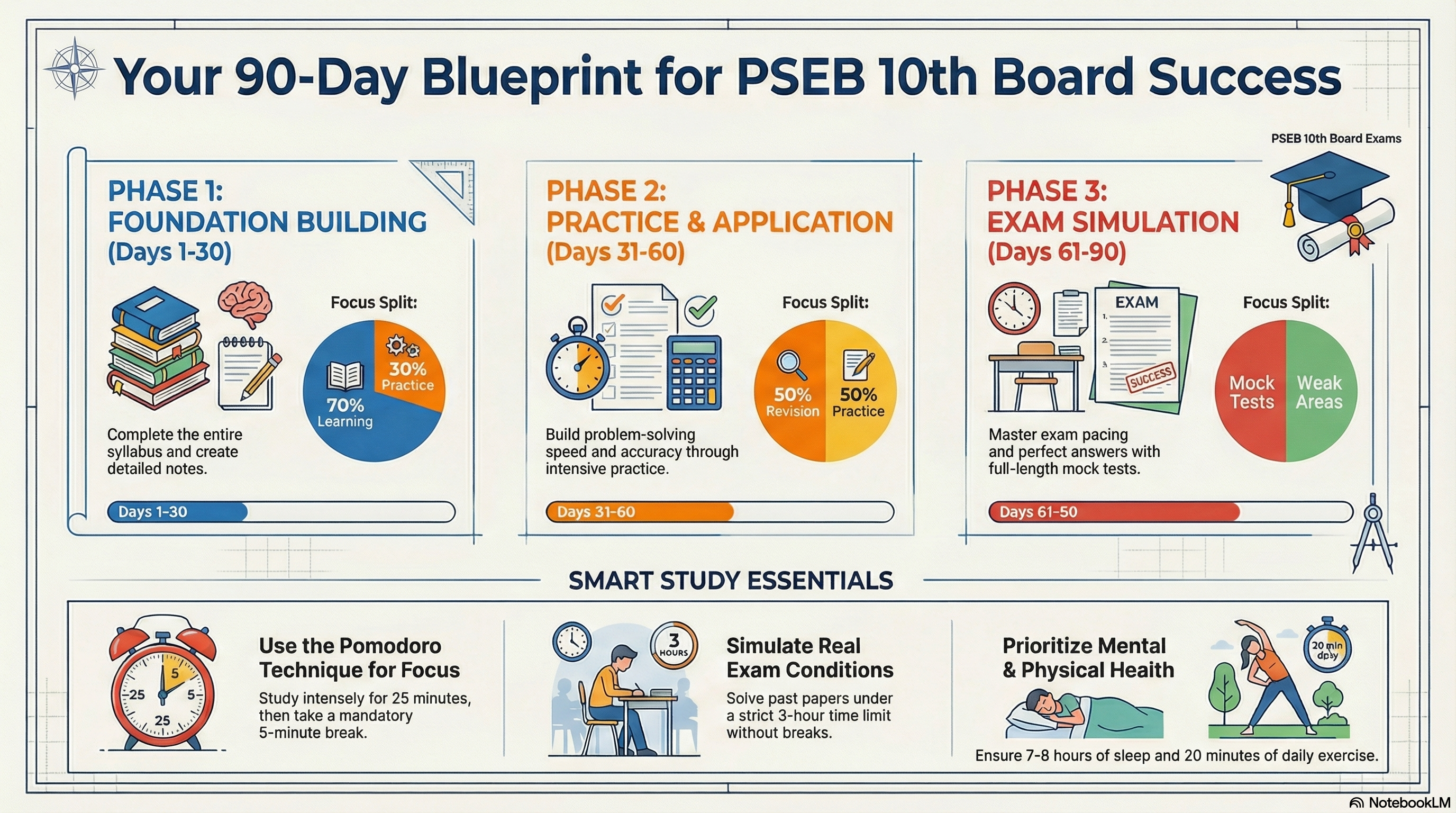
Your PSEB Class 10th 90-Day Master Plan (3 Strategic Phases)
Phase 1: Foundation Building (Days 1-30)
Goal: Complete the entire syllabus and create notes
Weekly Schedule:
| Day | Focus |
|---|---|
| Monday-Wednesday | Learn new topics |
| Thursday | Practice topic-wise questions |
| Friday | Revise your notes |
| Saturday-Sunday | Light review and rest |
Time Distribution:
- 70% learning new concepts
- 30% practicing questions
Key Activities:
- Make handwritten notes for all subjects
- Focus on understanding, not memorizing
- Mark difficult topics for Phase 2 revision
Phase 2: Practice & Application (Days 31-60)
Goal: Build speed and accuracy
Study Split:
- 50% revision of Phase 1 notes
- 50% intensive practice
Weekly Tasks:
- Solve topic-wise questions daily
- Take weekend mini-mocks (50-75 questions)
- Use active recall techniques
- Practice the “teach-back” method (explain concepts aloud)
- Create flashcards for formulas and definitions
Progress Tracking:
- Maintain an error notebook
- Track improvement in speed
- Identify and fix weak areas
Phase 3: Exam Simulation (Days 61-90)
Goal: Master exam pacing and perfect your answers
Weekly Routine:
| Day | Activity |
|---|---|
| Monday | Analyze previous mock test |
| Tuesday-Thursday | Focus only on weak topics |
| Friday-Saturday | Take full-length mock test |
| Sunday | Light revision and mental rest |
Critical Requirements:
- Full 3-hour mock tests in exam conditions
- Practice diagram-based answers
- Perfect your map work for Social Science
- Time each section strictly
Subject-Wise Expert Strategies
Mathematics (ਗਣਿਤ)
Golden Rules:
- Use only the textbook — no guides needed
- Focus on these high-weightage chapters:
- Real Numbers
- Polynomials
- Linear Equations
- Quadratic Equations
- Triangles
- Circles
- Trigonometry
Practice Method:
- Solve every example in the textbook
- Practice previous year questions
- Use reverse engineering (work backward from answers)
- Maintain a formula sheet
Common Mistakes to Avoid:
- Skipping steps in solutions
- Not showing working clearly
- Ignoring diagram labels
Science (ਵਿਗਿਆਨ)
Study Approach:
- Fix basics before moving to advanced chapters
- Create separate formula books for Physics and Chemistry
- Practice diagrams daily (Biology especially)
Section-Wise Tips:
Biology:
- Use flowcharts for processes
- Practice labeling diagrams
- Focus on definitions
Physics:
- Master numerical problem-solving
- Memorize all formulas
- Practice circuit diagrams
Chemistry:
- Learn chemical equations daily
- Practice balancing equations
- Understand reaction types
Minimum Target: 26/80 in theory paper
Social Science (ਸਮਾਜਿਕ ਵਿਗਿਆਨ)
Writing Strategy:
- Always write in point format
- Use clear headings and subheadings
- Underline important terms
Map Work:
- Practice map locations weekly
- Use blank maps for practice
- Mark clearly with a sharp pencil
Answer Writing Tips:
- Start with a one-line introduction
- Use bullet points for main content
- End with a brief conclusion
- Stick to one reliable source book
Languages (Punjabi, English, Hindi)
Daily Practice (30 Minutes):
- Grammar exercises
- Vocabulary building
- Reading comprehension
Writing Practice:
- Letters (formal and informal)
- Notices and messages
- Paragraph writing
- Essay writing
Punjabi Specific:
- Grammar needs focused revision
- Practice ਮੁਹਾਵਰੇ and ਕਹਾਵਤਾਂ
- Read sample answer papers
Writing Tips:
- Keep language simple and clear
- Maintain neat handwriting
- Follow proper format
Time Management Techniques That Work
Study Session Methods
Pomodoro Technique:
- 25 minutes focused study
- 5 minutes break
- Repeat 4 times, then take 15-minute break
Deep Focus Blocks:
- 50 minutes intensive study
- 10 minutes break
Daily Schedule Tips
Morning (High Energy):
- Mathematics
- Science
- Difficult chapters
Afternoon (Moderate Energy):
- Practice sessions
- Revision
Evening/Night (Lower Energy):
- Theory subjects
- Reading comprehension
- Light revision
Hidden Time Utilization
- Revise during travel
- Use breaks for flashcard review
- Listen to audio notes while exercising
Mock Test & Practice Paper Strategy
Past Year Papers (5-7 Years)
Process:
- Solve under timed conditions
- Check answers honestly
- Analyze mistakes
- Fix weak areas
- Repeat with another paper
Mock Test Rules
✅ Do:
- Simulate real exam environment
- Use proper answer sheets
- Follow 3-hour time limit strictly
- Mark strictly as per PSEB scheme
❌ Don’t:
- Take breaks during the test
- Check answers while solving
- Use open books
- Skip difficult questions
Error Notebook
Maintain a dedicated notebook for:
- Mistakes in mock tests
- Concepts you keep forgetting
- Tricky questions
- Quick revision formulas
Mental Wellness & Exam Readiness
Physical Health
- Sleep 7-8 hours daily
- Exercise 20 minutes (yoga, walking, sports)
- Eat nutritious meals
- Stay hydrated
Mental Health
- Practice deep breathing (5 minutes daily)
- Take study breaks
- Avoid social media during study hours
- Reward yourself for small achievements
Before Exam Day
- Don’t cram the night before
- Get proper sleep
- Keep exam essentials ready
- Stay calm and confident
90-Day Plan Summary
| Phase | Duration | Main Objective | Focus Split |
|---|---|---|---|
| Foundation | Days 1-30 | Complete syllabus + Notes | 70% Learning, 30% Practice |
| Application | Days 31-60 | Build speed + Accuracy | 50% Revision, 50% Practice |
| Simulation | Days 61-90 | Master exam pacing | Mock tests + Weak areas |
Weekly Study Routine (Sample)
| Day | Morning | Afternoon | Evening |
|---|---|---|---|
| Monday | New Math chapter | Science practice | Language grammar |
| Tuesday | Continue Math | Social Science theory | Revision |
| Wednesday | Finish chapter | Practice questions | Language writing |
| Thursday | Science chapter | Math problems | Flashcard review |
| Friday | Revision day | Revision day | Light study |
| Saturday | Mini mock test | Mock analysis | Free time |
| Sunday | Light revision | Weekly planning | Rest & recovery |
Essential Study Resources
Official PSEB Resources
Practice Materials
Subject-Wise Notes
Study Tools
Final Motivation
ਇਹ 90 ਦਿਨ ਤੁਹਾਡੀ ਜ਼ਿੰਦਗੀ ਬਦਲ ਸਕਦੇ ਹਨ।
Success in PSEB boards comes from:
- Discipline in following your plan
- Consistent practice every single day
- Smart revision using the right techniques
You don’t need to study 12 hours a day. You need to study smart, focused, and consistent.
Follow this 90-day plan honestly, and you will see results.
Your boards, your score, your future — all in these 90 days.


Exam pseb solution